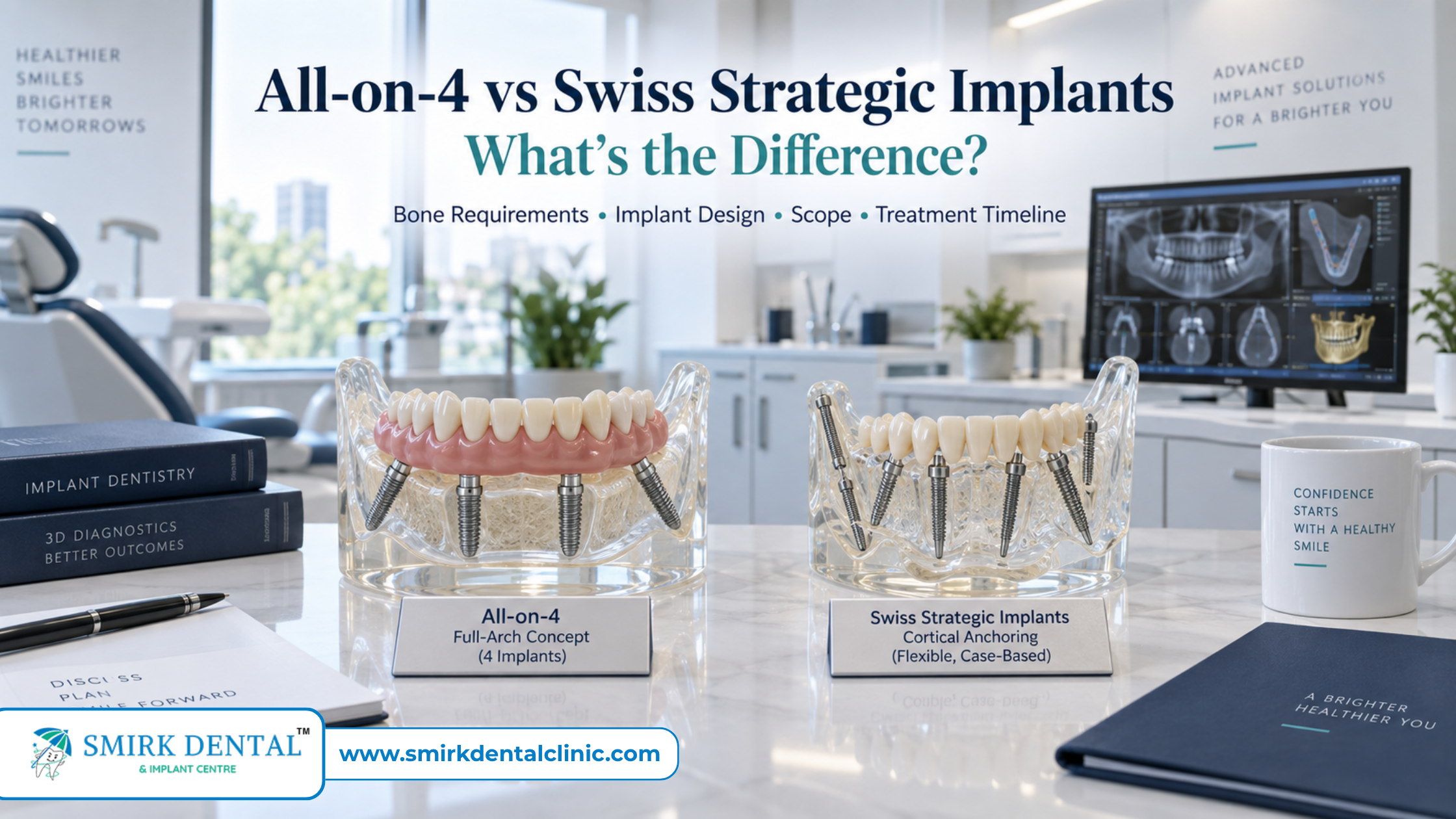
Search for full-arch dental implants, and two names come up constantly: All-on-4 and Swiss Strategic Implants. Both promise fixed, non-removable teeth. Both can move quickly compared to traditional implants. That similarity leads to a common assumption: that they’re basically the same thing with different branding. They’re not. Here’s what actually separates them, and why the difference matters for your specific case.
What All-on-4 Actually Is
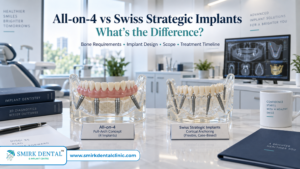
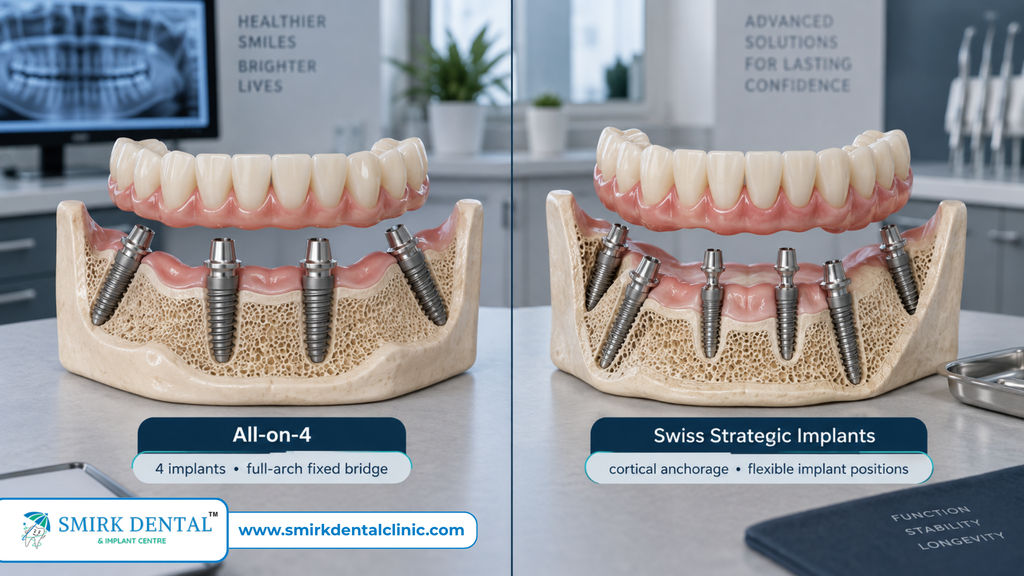
All-on-4 uses exactly four implants to support a full arch of fixed teeth. Two implants go in straight, at the front. Two go in at an angle toward the back. That angle reaches denser bone and often avoids the sinus area entirely. This angling is the clever part of the design. It’s often why patients with some bone loss can skip a bone graft under this specific protocol. Most All-on-4 cases get a fixed temporary bridge the same day as surgery. The final, permanent bridge usually follows three to six months later, once the implants have fully fused with the bone.
What Swiss Strategic Implants Actually Are
Swiss Strategic Implants take a different engineering approach. Instead of relying on standard bone volume, the implants anchor into denser, more stable cortical bone. It’s the same principle used in orthopaedic fracture fixation. That’s what allows the technique to work even for patients who don’t have enough bone for a conventional implant. It can even help in cases that would otherwise require a bone graft. It’s also not limited to full-arch cases. The same technique can restore a single tooth, several teeth, or a full arch, depending on what your case needs. For single-tooth and multi-tooth cases, this is what makes the 3-day timeline possible. Our earlier guide covers that timeline in detail.
The Real Differences
• Scope. All-on-4 is specifically a full-arch technique – it’s not used for single-tooth replacement. Swiss Strategic Implants can be used for one tooth, several teeth, or a full arch.
• Bone requirements. Both techniques can work around some bone loss, but in different ways. All-on-4 angles implants into existing denser bone. Swiss Strategic Implants anchor into bone that wouldn’t support a conventional implant at all, angled or not.
• Implant count. All-on-4 is fixed at four implants, by definition. Swiss Strategic Implants use however many, the specific case calls for.
• Timeline to final teeth. This is the one place “same day” gets misunderstood, for full-arch cases either way.
All-on-4 typically delivers a fixed temporary the same day as surgery. The permanent bridge follows three to six months later. Full-arch Swiss Strategic cases follow a similarly staged process. The 3-day timeline applies to single-tooth and multi-tooth cases specifically – not full-mouth rehabilitations, which need more time regardless of technique.
Which One Is Right for You?
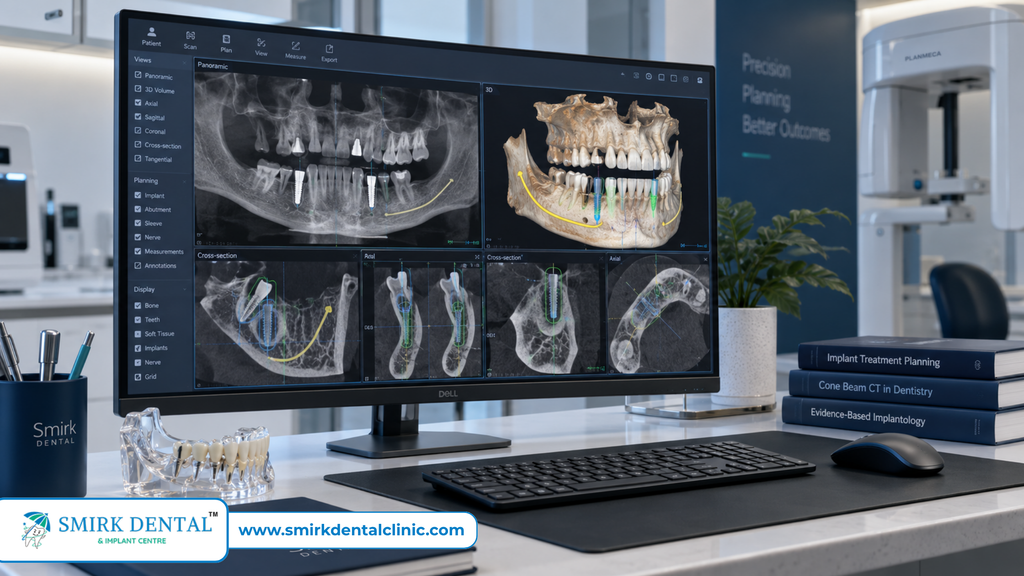
Neither technique is universally “better.” They solve overlapping problems in different ways. Missing an entire arch, with reasonably good bone at the front of your jaw? All-on-4 is a well-established, heavily studied option. Bone loss more extensive than that, or need something other than a full-arch solution? Swiss Strategic Implants may fit cases All-on-4 wasn’t designed for. Either way, the honest answer is the same. A CBCT scan and a proper evaluation tell you far more than a general comparison ever could.
Article that might interest you: How Dental Implants Replace Missing Teeth: Benefits & Cost
What About Cost?
Cost depends heavily on which technique fits your case. It also depends on how many implants are involved, and whether any additional procedures are needed. A number here would be a guess, not a quote. A free consultation is where you get an actual plan, and an actual cost, based on your own scans.
Frequently Asked Questions
Close, but not quite. Most All-on-4 patients do leave surgery with fixed temporary teeth the same day. The permanent bridge comes later, usually three to six months on, once healing is complete.
Sometimes. The angled back implants are specifically designed to work around moderate bone loss. But severe bone loss may rule it out. In that case, a technique like Swiss Strategic Implants, or bone grafting, becomes worth discussing.
Not universally – they suit different situations. Swiss Strategic Implants has a wider scope of use and different bone requirements. All-on-4 is a well-studied, widely used protocol for full-arch cases with adequate anterior bone. The right choice depends on your case, not a general ranking.
A CBCT scan and a proper evaluation are the only reliable way to know. General comparisons like this one are a starting point for questions to ask. They’re not a substitute for looking at your actual bone structure.

Not sure which full-arch option fits your case? Book a free consultation on WhatsApp or call +91 82870 64954.
Smirk Dental & Implant Centre, Laxmi Nagar – NABH accredited, ISO 9001:2015 certified.