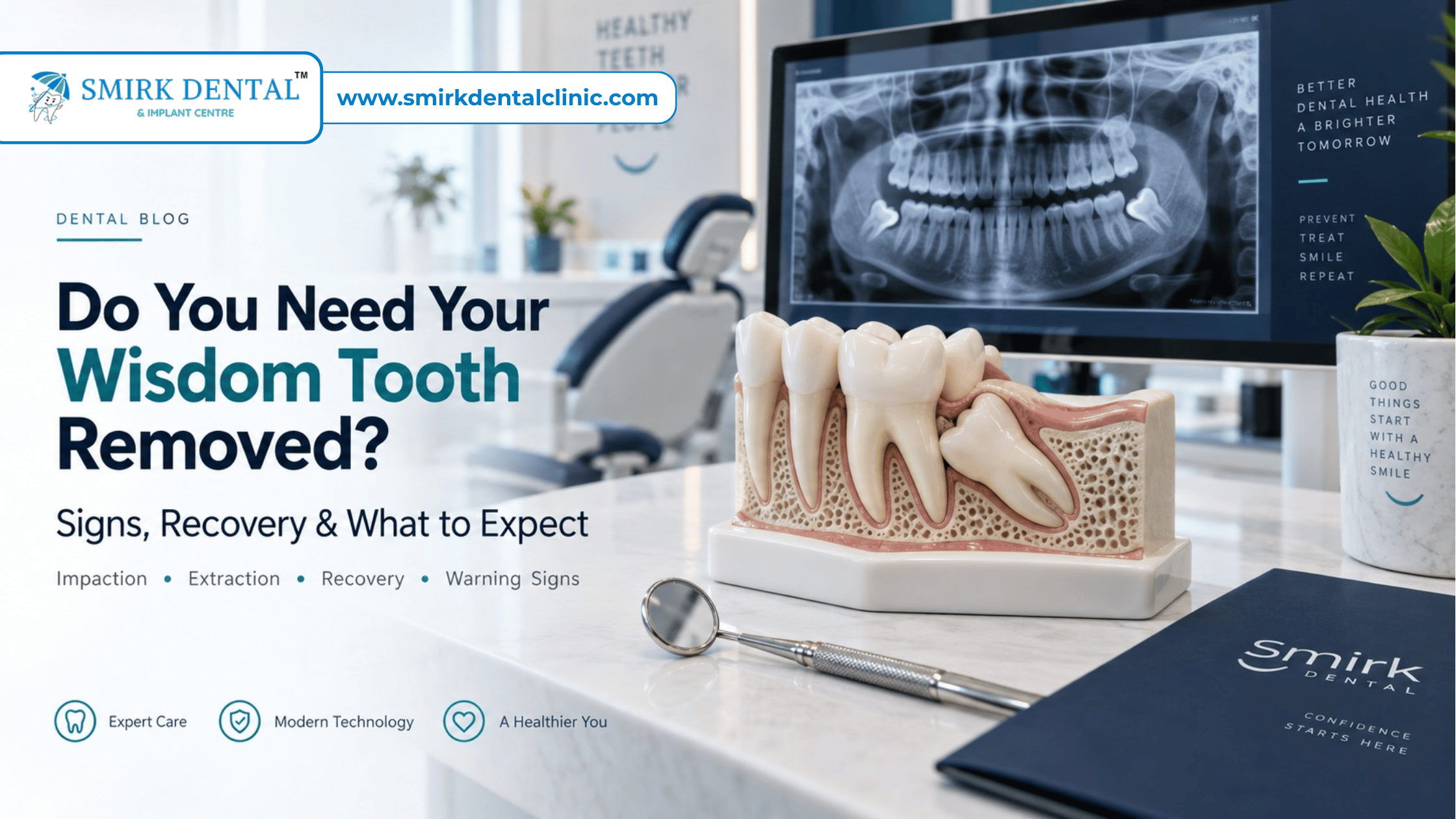
Wisdom teeth usually show up between ages 17 and 25, and not everyone has trouble with them. Some people never even notice theirs coming in. Others end up with pain, swelling, or a dentist recommending removal. If you’re somewhere in between, wondering whether your wisdom tooth actually needs to come out, this guide walks through the real signs, what the procedure involves, and what recovery honestly looks like.
Do You Actually Need It Removed?
Not always. Plenty of wisdom teeth erupt normally and cause no problems at all. Dentists usually recommend removal when a tooth is impacted – meaning it doesn’t have room to come in properly. This can lead to pain, swelling, or infection. It can also push against neighbouring teeth, causing crowding or damage over time. An X-ray is the only reliable way to see what’s actually happening beneath the gum. Pain alone doesn’t always mean you need removal. No pain doesn’t always mean everything is fine, either. That’s exactly why a proper look matters more than guessing from symptoms alone.
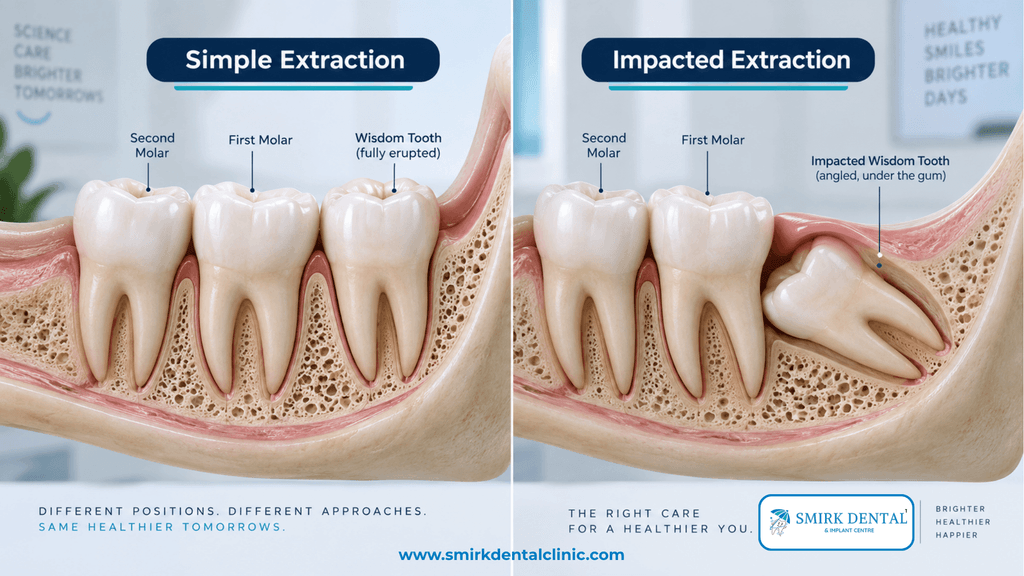
Simple vs Impacted Extraction
A simple extraction is for a tooth that’s already erupted through the gum. It’s quicker, and recovery tends to be shorter. An impacted extraction is more involved. The tooth still sits under the gum, sometimes still inside the jawbone. Reaching it may need a small incision. Occasionally, the dentist sections the tooth into pieces for easier removal. This isn’t a sign anything went wrong. It’s simply what the anatomy requires. Recovery differs between the two – worth knowing before you plan time off work.
What Recovery Actually Looks Like
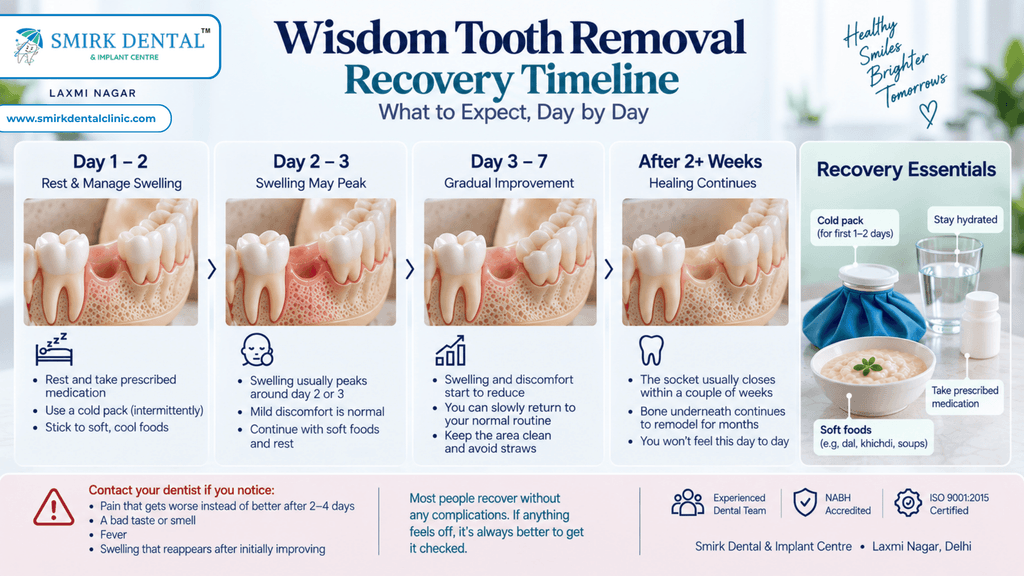
For a simple extraction, most people feel mostly back to normal within three to four days. For an impacted extraction, plan on closer to a week, with some lingering swelling possible into the second week. The first one to two days are usually the most uncomfortable, with swelling typically peaking around day two or three. Soft foods, rest, and avoiding straws for the first few days all help the healing process along. The socket itself takes a couple of weeks to close over, though the bone underneath keeps remodeling for months – you won’t feel that part day to day.
What Happens During the Procedure
Local anesthesia numbs the area first, so you shouldn’t feel pain during the extraction itself. Some clinics also offer sedation for patients who are anxious about dental procedures, or for more involved impacted cases. Once you’re numb, the dentist loosens the tooth and removes it, or removes it in sections if it’s impacted. Stitches sometimes follow, especially for impacted extractions, and these usually dissolve on their own within a week or two. The whole procedure is typically shorter than most patients expect – often well under an hour, even for impacted teeth.
Warning Signs to Watch For
Most recoveries go smoothly, but a few signs are worth acting on quickly. Pain that gets worse instead of better, two to four days after the procedure, can point to dry socket – a treatable but uncomfortable complication where the healing blood clot dislodges too early. A bad taste or smell, fever, or swelling that returns after initially improving can point to infection. Neither is common, but both are easy to treat early and harder to ignore late. If anything feels off, call rather than wait it out.
Article that might interest you : Can a Tooth Root Infection Affect or Spread to Nearby Teeth?
What About Cost?
Cost depends on whether the extraction is simple or impacted, how many teeth are involved, and which anesthesia or sedation option you choose. Rather than guess at a number that won’t match your case, a free consultation with an X-ray gives you an actual answer. It also tells you which type of extraction you’re actually looking at.
Frequently Asked Questions
An X-ray is the only reliable way to know for certain. Pain, swelling near the back of your jaw, or a tooth that seems stuck partway through the gum are common signs worth getting checked.
The procedure itself is done under anesthesia, so you shouldn’t feel pain during it. Afterward, soreness and swelling are normal for a few days and are manageable with pain relief and rest.
For a simple extraction, one to two days is often enough. For an impacted extraction, plan for closer to three to four days, especially if your job involves physical activity or a lot of talking.
Not necessarily – it depends on which teeth are actually causing problems. Some people need one removed, others need all four. An X-ray and evaluation will show what your specific case needs
Dealing with wisdom tooth pain? Book a free consultation on WhatsApp or call +91 82870 64954.
Smirk Dental & Implant Centre, Laxmi Nagar – NABH accredited, ISO 9001:2015 certified.