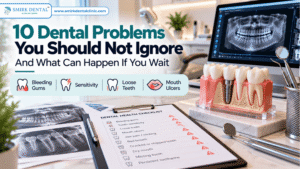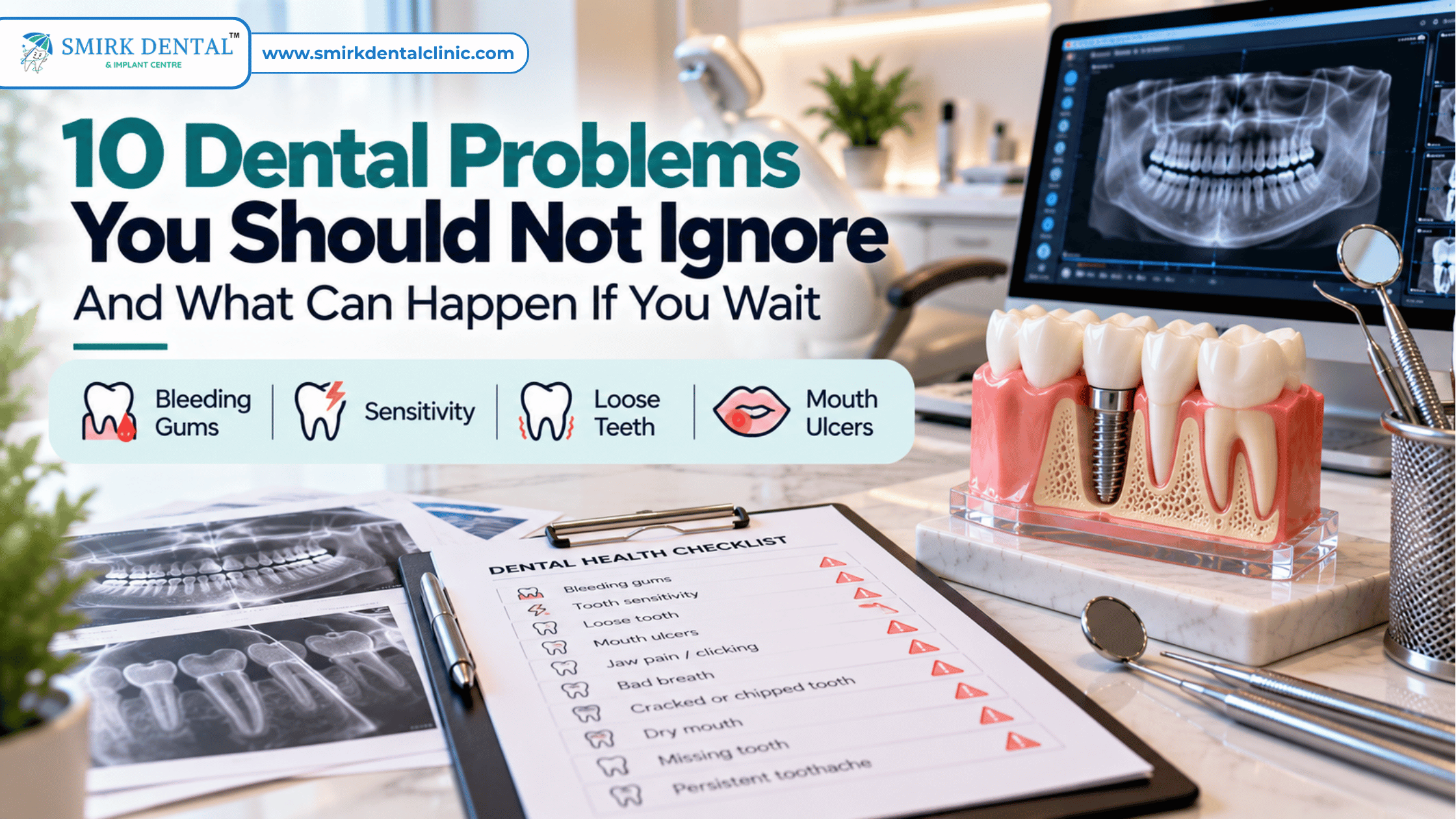
Most people see a dentist when something hurts. But some of the dental problems you should not ignore don’t hurt at all, at least not at first. Bleeding gums, a loose tooth or a sore that won’t heal can be early signs of something that’s easier to treat now than later. This guide covers ten warning signs, what can happen if you wait, and when to book a visit. It’s general information, so only an exam can tell you what is happening in your own mouth.
Dental Problems You Should Not Ignore: Gums and Breath
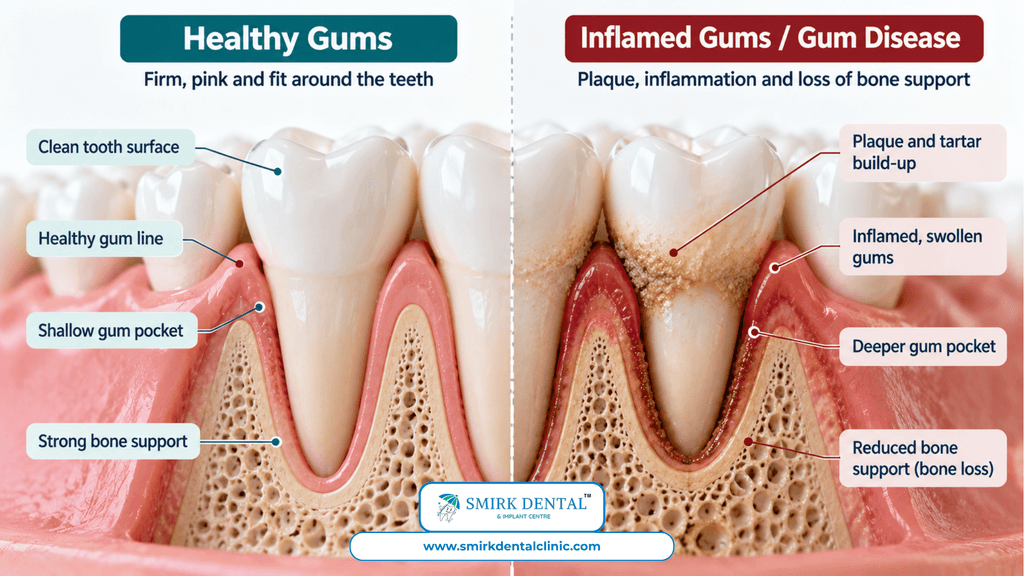
1. Bleeding gums. Healthy gums don’t bleed when you brush or floss. Bleeding usually points to gum inflammation caused by plaque. Left alone, the infection can spread below the gum line, so it can damage the bone that holds your teeth. The early stage can usually be reversed with a professional cleaning and better brushing, while later bone damage cannot. Our guide to laser gum treatment covers the options for advanced cases.
2. Bad breath that won’t go away. Everyone has bad breath sometimes. But breath that stays bad despite brushing can come from gum disease, decay or a dry mouth. Mouthwash only masks it. So a dentist looks for the cause, and treating the cause is what clears it.
3. A loose tooth in an adult. Adult teeth shouldn’t move. A loose tooth can mean gum disease has damaged the bone around it, or that injury or heavy grinding has stressed it. If you wait, it can fall out. Still, early treatment sometimes saves it.
4. A swollen gum or a pimple-like bump. A bump on the gum can mean pus has collected around an infected tooth or in the gum. It may come and go, which makes it easy to ignore. But the infection is still there, and it can spread. If swelling reaches your face or neck, or you struggle to swallow or breathe, get urgent help.
More Dental Problems You Should Not Ignore: Teeth That Hurt a Little, or Not at All
5. Tooth sensitivity to hot, cold or sweet. A twinge now and then is common. Tooth sensitivity that keeps coming back can point to worn enamel, receding gums, a cavity or a cracked tooth. Each one needs a different fix. So rather than switching toothpaste for months, let a dentist find the cause.
6. A cracked or chipped tooth that feels fine. Small cracks often don’t hurt. Over time, though, chewing can make them deeper. A crack that reaches the inner tooth can cause pain and infection, and then the tooth may need a root canal or a crown.
7. Jaw clicking, jaw pain or flattened teeth. Grinding or clenching, often in sleep, wears teeth down and can strain the jaw. Also, you may notice morning headaches, a sore jaw or teeth that look shorter. Left alone, grinding can crack teeth and make them sensitive. A dentist can check the wear and suggest ways to protect your teeth.
Last Few Dental Problems You Should Not Ignore: Inside the Mouth
8. A mouth ulcer that isn’t healing. Most mouth ulcers clear up within a week or two. But an ulcer that lasts longer than three weeks, a red or white patch, or a lump should be checked. Most turn out to be harmless. Still, a long-lasting ulcer can sometimes be an early sign of mouth cancer, and finding it early may make it easier to treat. Our older guide on oral hygiene and oral cancer explains the risk factors.
Sources: NHS, Gum disease (nhs.uk/conditions/gum-disease) and NHS, Mouth ulcers (nhs.uk/conditions/mouth-ulcers); HSE Ireland, Gum disease symptoms (hse.ie/conditions/gum-disease/symptoms)
9. A dry mouth that doesn’t ease. Saliva protects your teeth by washing away food and acids. When there’s less of it, decay and gum problems become more likely. Some medicines, health conditions and mouth-breathing cause a dry mouth. So a dentist can help you protect your teeth while you find the cause.
10. A missing tooth you’ve left alone. A gap may not trouble you, so it’s easy to leave. But neighbouring teeth can drift into the space, your bite can change, and the bone under the gap can shrink over time. Replacing the tooth sooner keeps more options open. Our guide to implants vs dentures compares them.
Signs You Need to See a Dentist Soon
Dental problems you should not ignore usually share one feature: they last, they return, or they get worse. Those are the signs you need to see a dentist. Book a visit soon if a symptom stays for more than a couple of weeks. However, don’t wait if you have a loose tooth, a sore that hasn’t healed in three weeks, or pain that wakes you at night. Get urgent help if swelling spreads, if you have a fever, or if swallowing or breathing becomes difficult. Regular check-ups also catch many of these problems before you notice them.
Frequently Asked Questions
Tooth decay, gum disease and sensitivity are among the most common dental problems. Many start quietly, so they are dental problems you should not ignore. Regular check-ups help catch them early.
Swelling that spreads, a loose tooth, and a sore that hasn’t healed in three weeks need attention first. Persistent bleeding gums also need a visit, even though they rarely hurt.
Sometimes the bleeding eases with better cleaning, but it can come back. If your gums bleed when you brush, see a dentist rather than waiting to see what happens.
Not always. Pain can sometimes stop because the nerve inside the tooth has died, while the infection continues. So have the tooth checked even if it no longer hurts.
Your dentist sets this based on your gums, your history and your risk. So ask at your next visit, then keep to the schedule you agree.
Think you have one of these dental problems you should not ignore? Book a free consultation on WhatsApp or call +91 82870 64954.
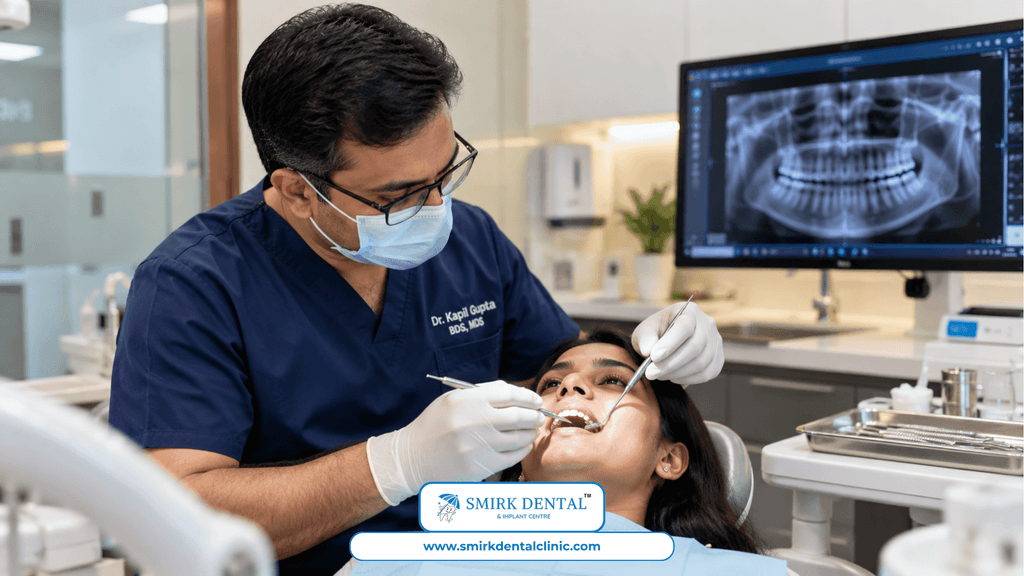
Reviewed by Dr. Kapil Gupta, BDS, MDS (Oral & Maxillofacial Prosthodontics), Maulana Azad Institute of Dental Sciences (MAMC), Delhi. Founder, Smirk Dental & Implant Centre, Laxmi Nagar – NABH accredited, ISO 9001:2015 certified.