“Root canal” might be the most feared phrase in dentistry. It’s also one of the most outdated fears. Ask anyone who’s had one recently, and the story is usually different from what you’d expect. Modern anesthesia and instruments have changed the experience completely. This guide explains what root canal treatment actually feels like today, and what “painless RCT” really means in practice.
Where the Painful Reputation Comes From
The fear isn’t irrational. It’s just old. Decades ago, root canal treatment really was uncomfortable, mainly because anesthesia and instruments were far less precise. That reputation stuck, and it gets passed down. But dentistry has changed a lot since then. Local anesthesia today numbs the area completely before any instrument touches the tooth. Modern rotary tools and digital imaging make the whole process faster and more precise. The procedure your parents remember is not the procedure that happens today.
What You Actually Feel During Treatment
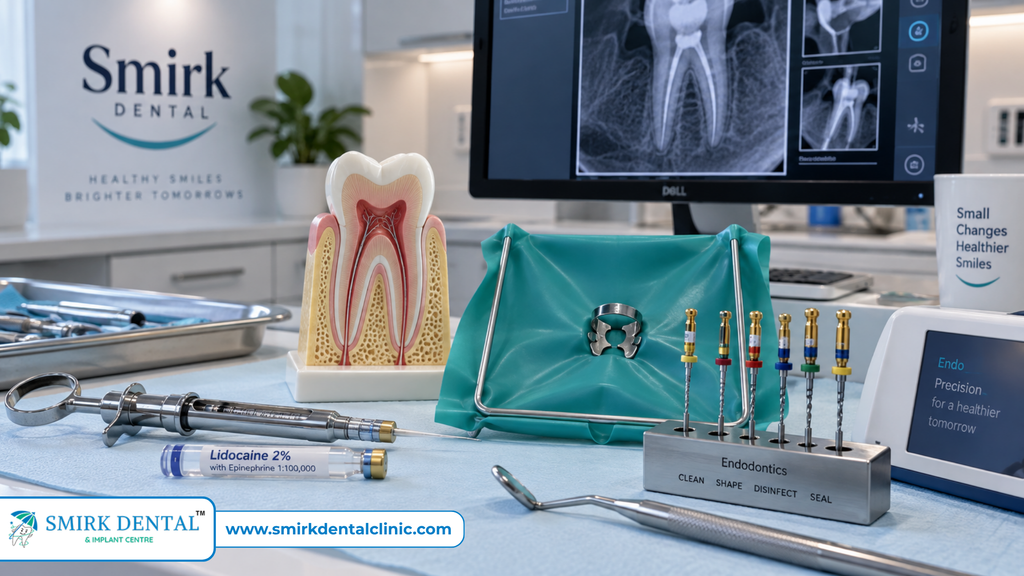
Pressure, mostly. Not pain. Once the anesthesia takes effect, most patients describe a feeling similar to getting a filling. Some vibration, some pressure. No sharp pain. A rubber dam usually isolates the tooth, keeping the area clean and dry throughout. If you feel any discomfort during the procedure, tell your dentist right away. More anesthesia can be given immediately. You should not be gritting through pain during a root canal in 2026.
Is Root Canal in One Sitting Right for You?
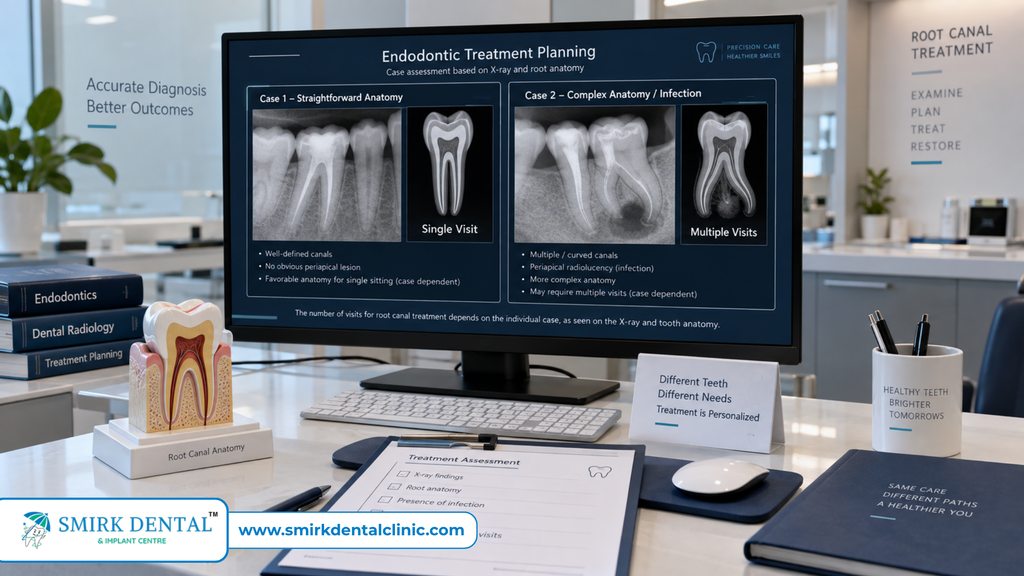
Often, yes. Modern instruments have made single-sitting root canal treatment a predictable option for many cases. But not every tooth is a good candidate. Severe infections, complex root anatomy, or an active abscess sometimes call for a different approach. That means multiple visits, with medication placed inside the tooth between appointments to help it heal. That’s not a lesser treatment. It’s simply the right choice for that specific case. A recent review looked at results from twelve separate studies. It found no consistent difference in postoperative pain between single-visit and multi-visit treatment. In plain terms: the number of visits isn’t what determines how much discomfort you feel afterward. Your specific tooth decides your treatment plan, not a general preference for speed.
What Recovery Actually Feels Like
Mild soreness for a day or two is normal, especially once the anesthesia wears off. Over-the-counter pain relief usually handles it. Most patients are back to their normal routine the same day, or the next. Try to avoid chewing on the treated side for a few days. This matters most before a permanent crown or filling goes on. Contact your dentist if pain gets worse instead of easing. The same goes for any swelling – that’s not typical, and it’s worth checking.
What to Expect at the Appointment
An X-ray comes first, so your dentist can see the shape of the root and how far the infection has spread. Then comes the anesthesia, and a short wait for it to take full effect. Once you’re numb, a small opening is made in the tooth to reach the infected pulp. That tissue is removed, the space is cleaned and shaped, and then sealed. If a crown is needed afterward, that’s usually a separate, later step, since the tooth needs to settle first. None of this should feel rushed – a careful, unhurried approach is part of what makes the outcome last.
Article that might interest you: Dental Implant Cost in Delhi: What Actually Affects the Price
What About Cost?
Cost depends on the tooth, the complexity of the case, and whether a crown is needed afterward. A number here wouldn’t match most people’s actual case, so we won’t quote one. The honest step is a proper look at the tooth first. A free consultation is where that happens, with X-rays and a clear plan before any commitment.
Frequently Asked Questions
Not typically, once you’re numb. Most patients describe similar sensations – pressure and vibration, not pain. The reputation for pain is mostly left over from decades-old dentistry.
No, and that’s normal. Simple cases often finish in one visit. Complex infections or unusual root anatomy may need two visits for the best long-term outcome. Your dentist will tell you which applies to your tooth after an X-ray.
Not at all. It usually just means your case benefits from medication sitting inside the tooth between visits. Both approaches have similar success rates when done well.
Mild soreness usually settles within one to two days. If pain gets worse instead of better, call your dentist. The same goes for any swelling – don’t wait it out.
Putting off a root canal because you’re worried about pain? Book a free consultation on WhatsApp or call +91 82870 64954.
Smirk Dental & Implant Centre, Laxmi Nagar – NABH-accredited, ISO 9001:2015 certified.